

Ubineer Predictions: Our AI Forecast for Oracle Q1 FY27 vs Actual Results

Ubineer Staff • September 16, 2026

Ubineer's Predictions platform continues to demonstrate strong predictive capabilities for analysts, portfolio managers, and CIOs. Following our recent case study on Adobe's Q3 FY26 results, today we turn our attention to our AI-powered forecasts, performed against Oracle Corp's Q1 FY27 actual results and management's prior forward outlook.

Source: Ubineer Predictions 2026-09-09 06:23 ET


Pinpoint Revenue Accuracy


Ubineer's core objective is providing high-precision fundamental models that anticipate how enterprise leaders fundamentally perform relative to consensus and management guidance. Our predictive software demonstrated tight precision when evaluating Oracle Corporation (ORCL) for Q1 FY27:


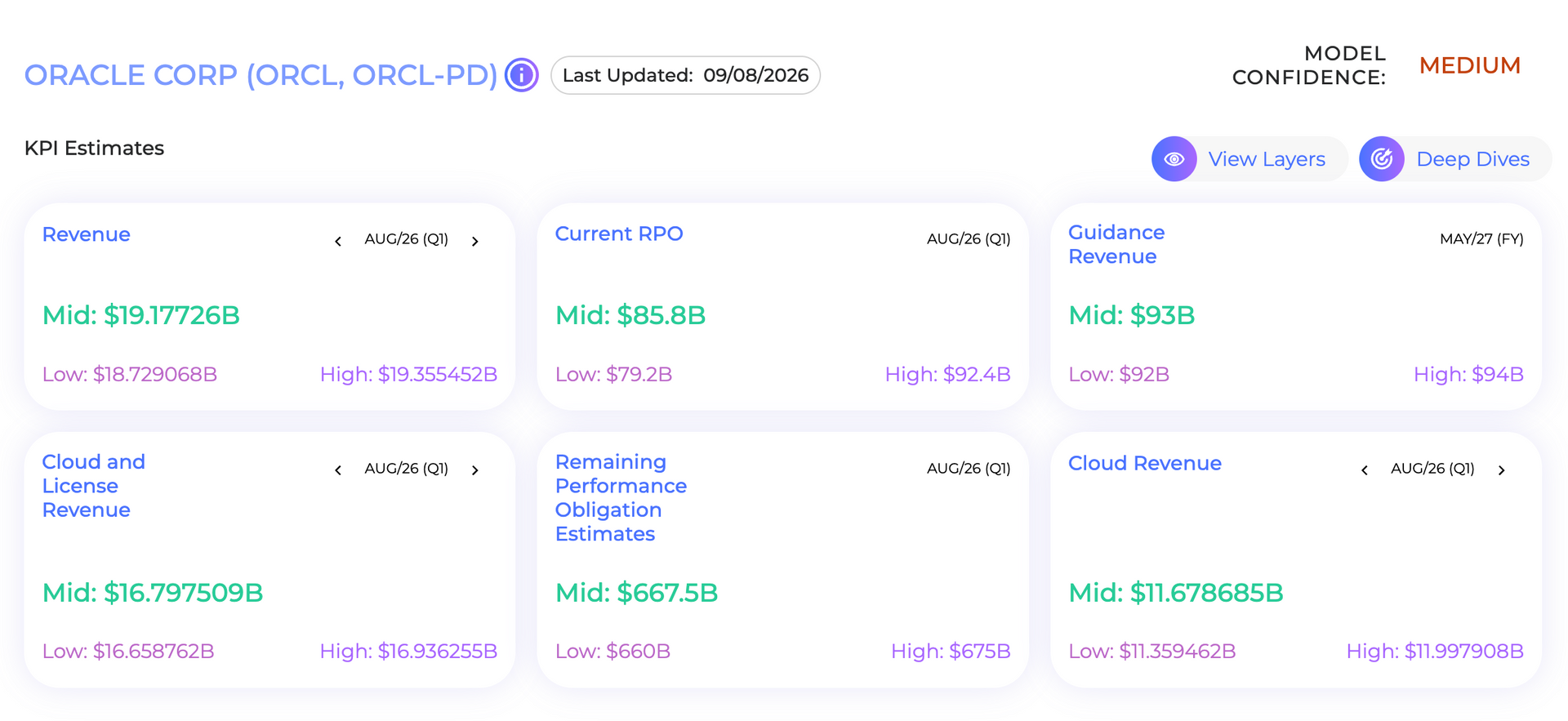
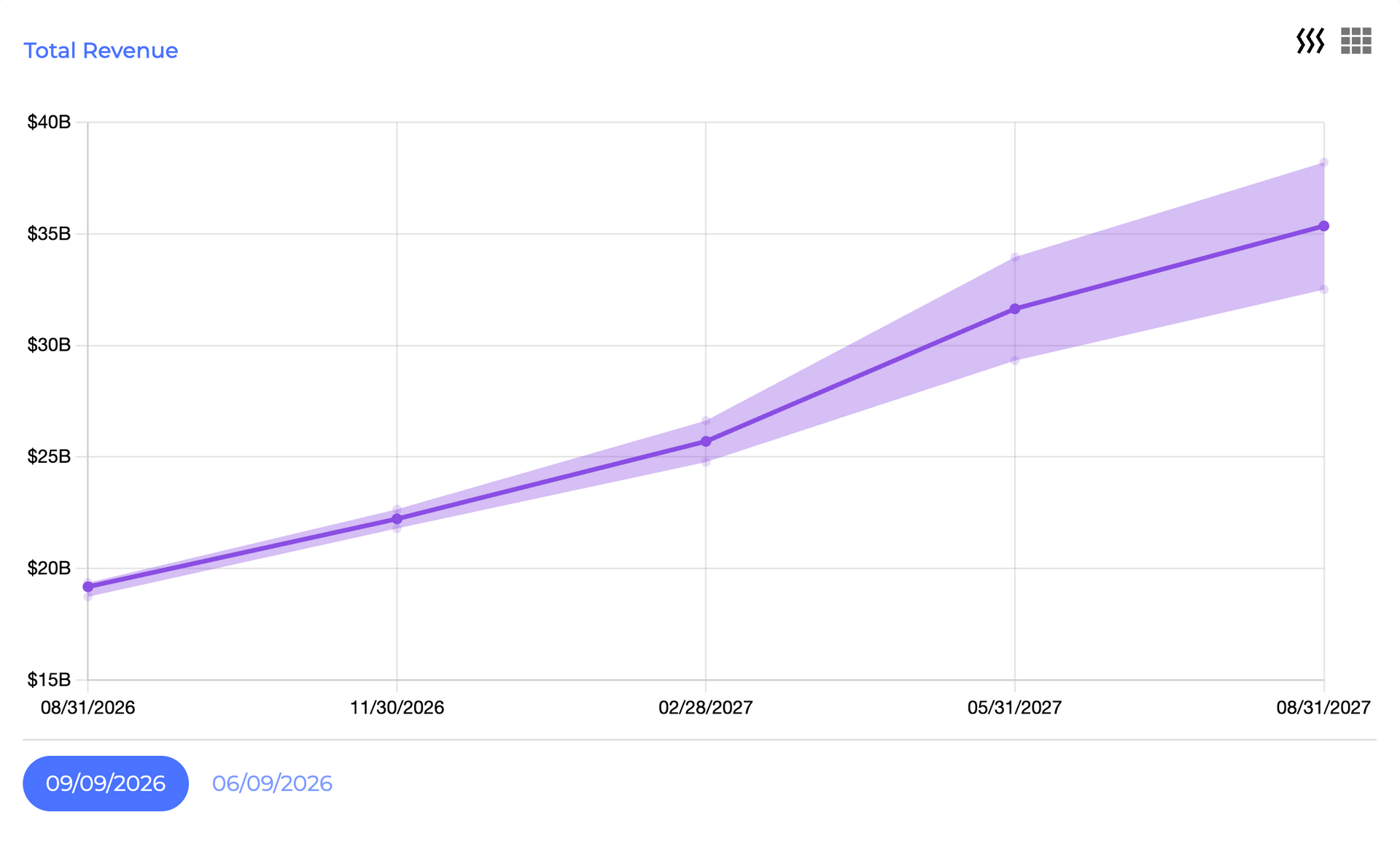
  • Ubineer's Prediction: Q1 FY27 Total Revenue was forecast at $19.177 billion within an 80% confidence interval of $18.729B to $19.355B.
  • Actual Result: Oracle reported actual Q1 FY27 total revenue of $19.345 billion.
  • Accuracy: Ubineer’s AI midpoint landed comfortably within the forecast interval with a dollar delta of — $167.74 million — representing a tight 0.867% variance.
Chart showing Ubineer's Predictions accurately called Oracle's earnings on September 9, 2026.

Granular Line-Item and Operational Breakdown


Beyond topline metrics, Ubineer breaks down Oracle's operational engine into specific cloud and infrastructure revenue drivers:


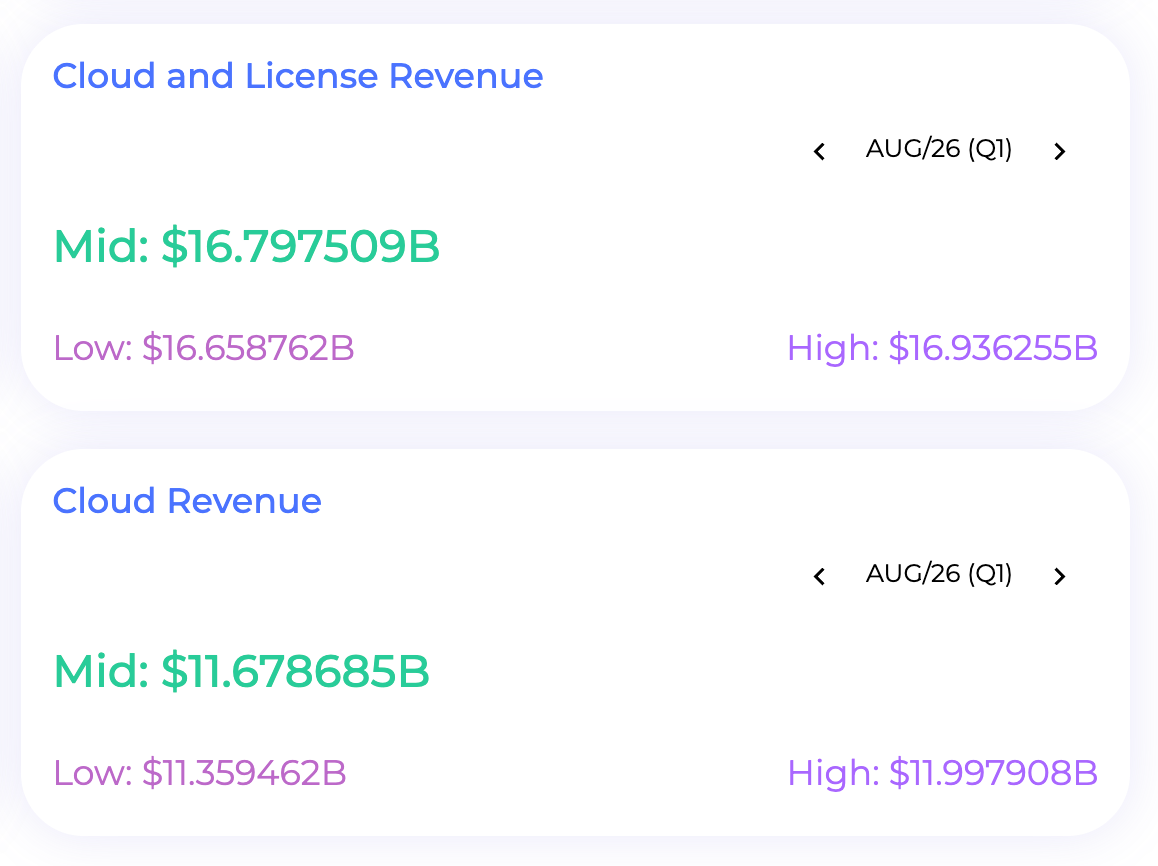
Cloud and License Combined Revenue

  • Prediction: $16.798 billion
  • Actual: $17.157 billion
  • Accuracy: A 2.09% variance across combined cloud subscriptions and software license support.


Total Cloud Revenue (IaaS + SaaS)

  • Prediction: $11.679 billion
  • Actual: $11.607 billion
  • Accuracy: A 0.618% variance (+$71.69 million delta) on Oracle's primary cloud engine.

Ubineer's Predictions Revenue Guidance for Nvidia's Q3 2026

Source: Ubineer Predictions 2026-09-09 06:23 ET

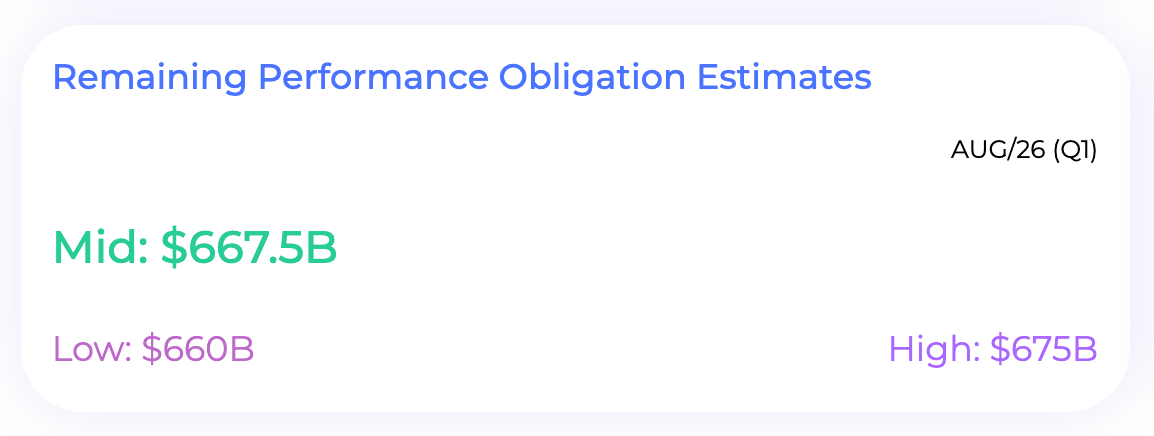
Remaining Performance Obligations (RPO)

  • Prediction: $667.50 billion
  • Actual: $664.00 billion
  • Accuracy: A 0.527% variance (+$3.50 billion delta) across total long-term contract backlog.

Forecasting Management Guidance & Long-Term Targets


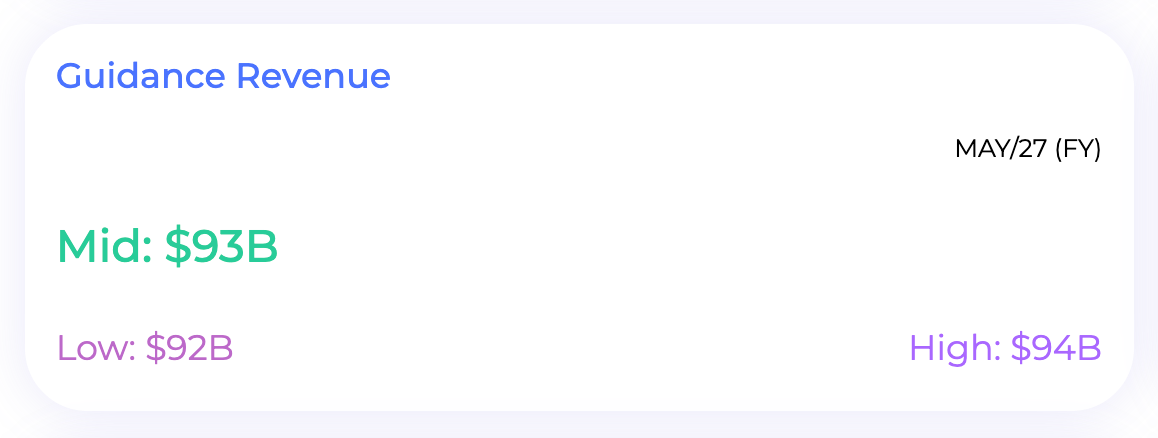
In Oracle's Q4 FY26 earnings release, management guided Q1 FY27 total revenue growth to 27%–29% ($18.96B–$19.26B, midpoint $19.11B). Ubineer's AI model anticipated Q1 actual performance at $19.177B, providing investors an independent expectation aligned with upper-tier execution. Looking further out across full-year FY27 targets:


  • Ubineer's Full-Year Outlook: AI midpoint forecast of $93 billion (range: $92B to $94B).
  • Actual Management Guidance: Oracle confirmed and raised full-year targets to "at least $90 billion" in total revenue.


Chart of Ubineer's Predictions for Nvidia's Data Centre  Revenue

Source: Ubineer Predictions 2026-09-09 06:23 ET


Gain the AI Advantage Ahead of Next Quarter’s Earnings


Navigating massive AI infrastructure investment cycles requires line-item clarity before earnings releases occur. Whether you are validating a high-conviction thesis, evaluating datacenter expansion risk, or stress-testing sell-side consensus, Ubineer delivers multi-quarter predictive intelligence across public equities.


Want to see how our models perform on your watchlist?


We are currently opening up custom model previews for institutional investment managers, portfolio leads, and equity analysts. Contact our team to request a complimentary forecast for any ticker of your choice.


Schedule a demo, request a ticker forecast or reach our team directly at (647) 598-1809 or email us info@ubineer.com.

Share this article

Recent Posts

Adobe logo on white background
By Ubineer Staff September 13, 2026
Ubineer showcases its predictive capabilities ahead of Adobe's Q3 2026 earnings release. In this study, their AI and ML models are remarkably accurate and getting better.
By Ubineer Staff September 2, 2026
Ubineer's Predictions continues to demonstrate a strong value proposition to analysts, portfolio managers, and CIOs. Following our recent case study on AMD's Q2 results , today we evaluate how our AI-powered forecasts performed compared with NVIDIA's Q2 FY27 actual results .